
How to Prepare Your Vehicle for Cross-Country Shipping

Properly preparing your car for long-distance auto transport is one of the most effective steps you can take to guarantee a seamless shipping experience. Not only does adequate preparation protect your vehicle from preventable transit damage, but it also creates the official documentation necessary to settle insurance claims quickly in the rare event of a mishap.
Follow this practical 7-step preparation checklist before your scheduled carrier arrives.
Step 1: Wash the Exterior and Clean the Cabin
While it may seem counterintuitive to wash a vehicle that will travel on an open highway trailer, a clean car is essential for accurate pre-shipment documentation:
- Dirt, mud, and road film conceal minor door dings, paint chips, and scratches.
- A clean vehicle allows you and the carrier driver to perform a fast, accurate pre-loading inspection.
- Clean the interior cabin as well to ensure personal items and electronic devices are not left behind.
Step 2: Conduct a 360-Degree Photo Inspection
Before the driver loads your car onto the trailer:
- Walk around the vehicle in bright daylight and capture high-resolution photos of all four corners, the roof, front bumper, rear bumper, windshield, and alloy wheels.
- Take close-up photos of any pre-existing blemishes, paint imperfections, or scratches.
- Ensure your smartphone camera captures date and time stamps on every image file.
- Keep these photos stored safely until your vehicle is delivered and signed off.
Step 3: Keep the Fuel Tank at Exactly One-Quarter Full
Federal motor carrier safety regulations strongly advise keeping vehicle fuel levels low during transit:
- Weight Reduction: A full 20-gallon gas tank adds approximately 125 pounds of deadweight to the car carrier, reducing overall trailer fuel efficiency and causing potential DOT scale issues.
- Safety Precaution: Lower fuel levels minimize hazardous vapor buildup and fire risks in the unlikely event of highway incidents.
- Do Not Leave on Empty: The driver still needs sufficient gasoline to start the car and maneuver it on and off the trailer ramps during terminal stops. Aim for between one-eighth and one-quarter tank.
Step 4: Remove All Personal Belongings and Valuables
Department of Transportation regulations prohibit commercial car carriers from transporting household goods and personal property inside vehicles:
- No Insurance Coverage: Carrier cargo insurance policies strictly protect vehicle components; they explicitly exclude personal items, electronics, and luggage left inside the cabin or trunk.
- Risk of Theft and Movement: Loose items inside the car can shift during sudden braking or highway turns, cracking interior windows or damaging upholstery.
- Allowed Exception: Most carriers permit up to 100 lbs of soft luggage secured in the trunk beneath the window line, but you transport these items entirely at your own risk.
Step 5: Deactivate Alarms and Remove Automated Toll Tags
Two small oversights cause frequent headaches for drivers during cross-country transport:
- Antitheft Alarms: Highway vibrations and trailer movement can trigger sensitive vehicle motion sensors. If an alarm blares continuously while in transit, it will rapidly drain your car battery and cause significant driver distraction. Ensure the security system is fully disarmed or placed in valet mode.
- Toll Transponders (E-ZPass, SunPass, FasTrak): Automated toll collection gantries along turnpikes will register active transponders inside the car, charging your personal toll account hundreds of dollars while the carrier passes underneath. Remove toll tags and store them in a protective foil bag or take them with you.
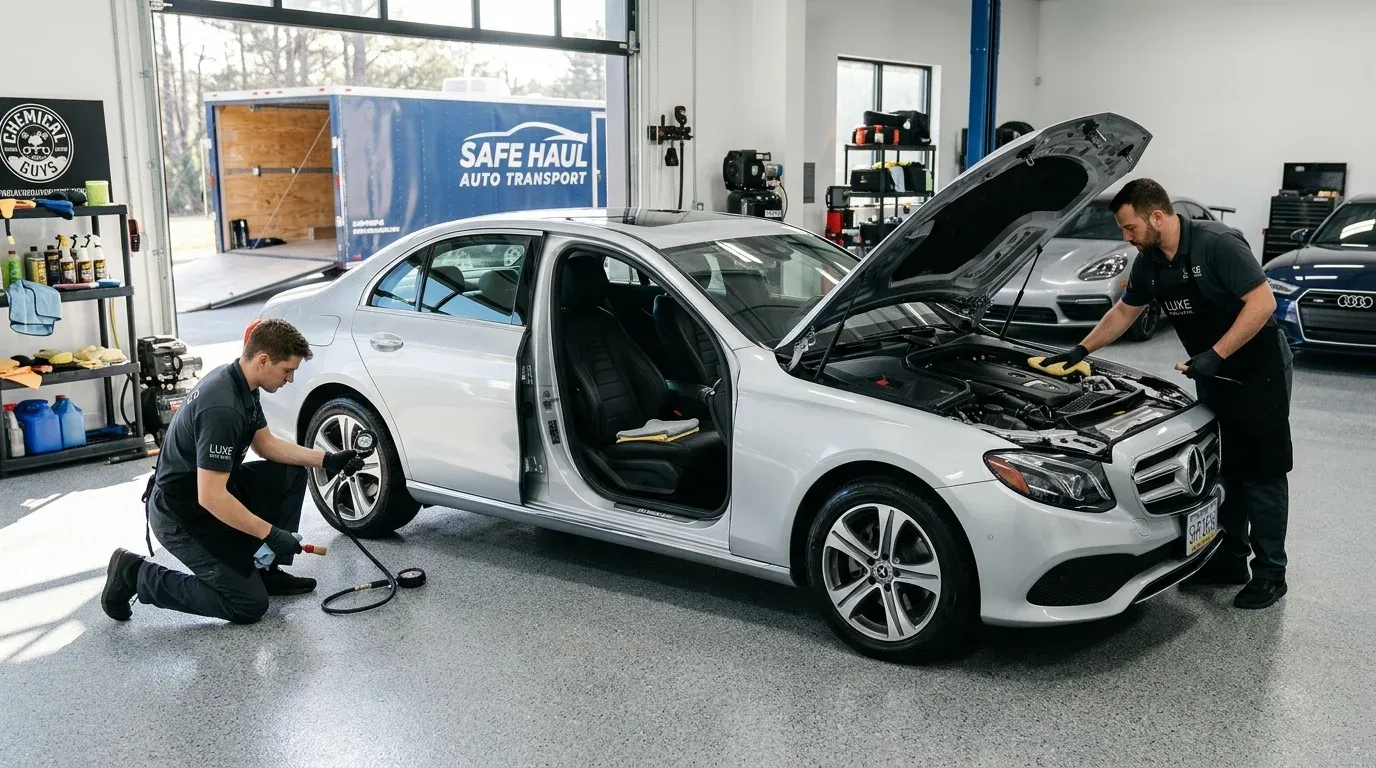
Step 6: Check Mechanical Fluids, Battery, and Tires
Ensure the car is roadworthy for loading and unloading:
- Tire Pressure: Check that all four tires are inflated to manufacturer recommendations. Underinflated or flat tires can slip during trailer winching and risk rim damage.
- Check for Leaks: Identify any active engine oil, transmission, or coolant leaks. Severe fluid leaks may damage other customer vehicles loaded on lower trailer decks, making you liable for cleaning costs.
- Fully Charged Battery: The carrier must be able to start the car reliably without jump packs every time other vehicles require rearrangement on the hauler.
Step 7: Prepare a Spare Key and Sign the Bill of Lading (BOL)
When the driver arrives at your pickup location:
- Provide the driver with a spare ignition key rather than your primary key fob. Keep your master set with you.
- Carefully inspect the vehicle together with the driver and review the Bill of Lading (BOL). This document records all acknowledged scratches, dents, and odometer readings.
- Ensure the driver signs the BOL before driving away, and keep your carbon copy or digital copy safe. Upon delivery, you will compare the vehicle condition against this initial record.